Problem
ARC Marine® and Structural Evolution Ltd asked us to develop a solution to install 4No, 8t coastal marine mattresses that would cover and protect the new seawater inlet pipe for The Marine Biological Association Laboratory in Plymouth.
Solution
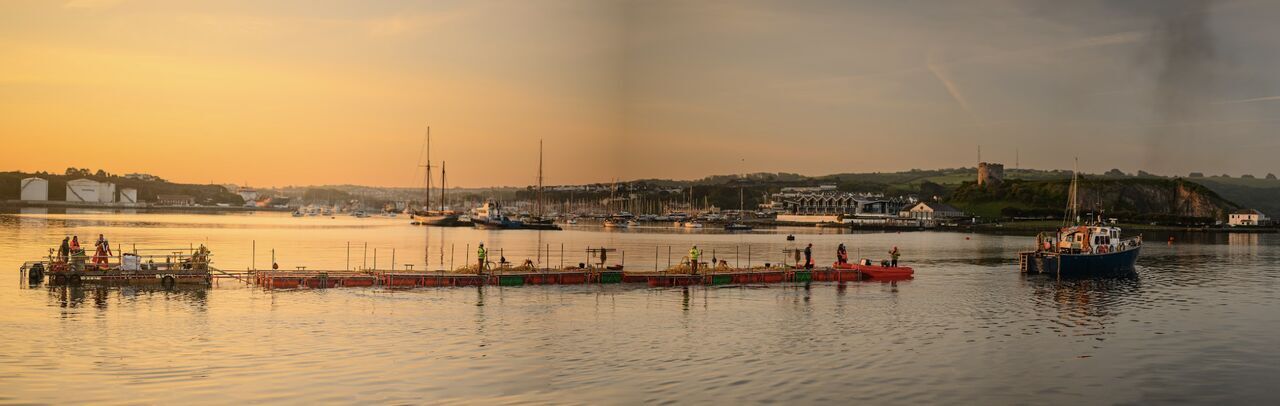
We provided the following solution using ScaffFloat, sinking the two rear pontoons to drop the mattress to the seabed.
1. The mattress and pipe were laid out on a slipway at Queen Annes Battery in Plymouth at low tide. This was done using a custom scaffold lifting frame we designed and provided.
2. We mobilised 4 No, 6m x 5m ScaffFloat pontoons which were lifted on top at low tide and the mattress was then attached to the underside of the pontoons with multiple 5t straps.
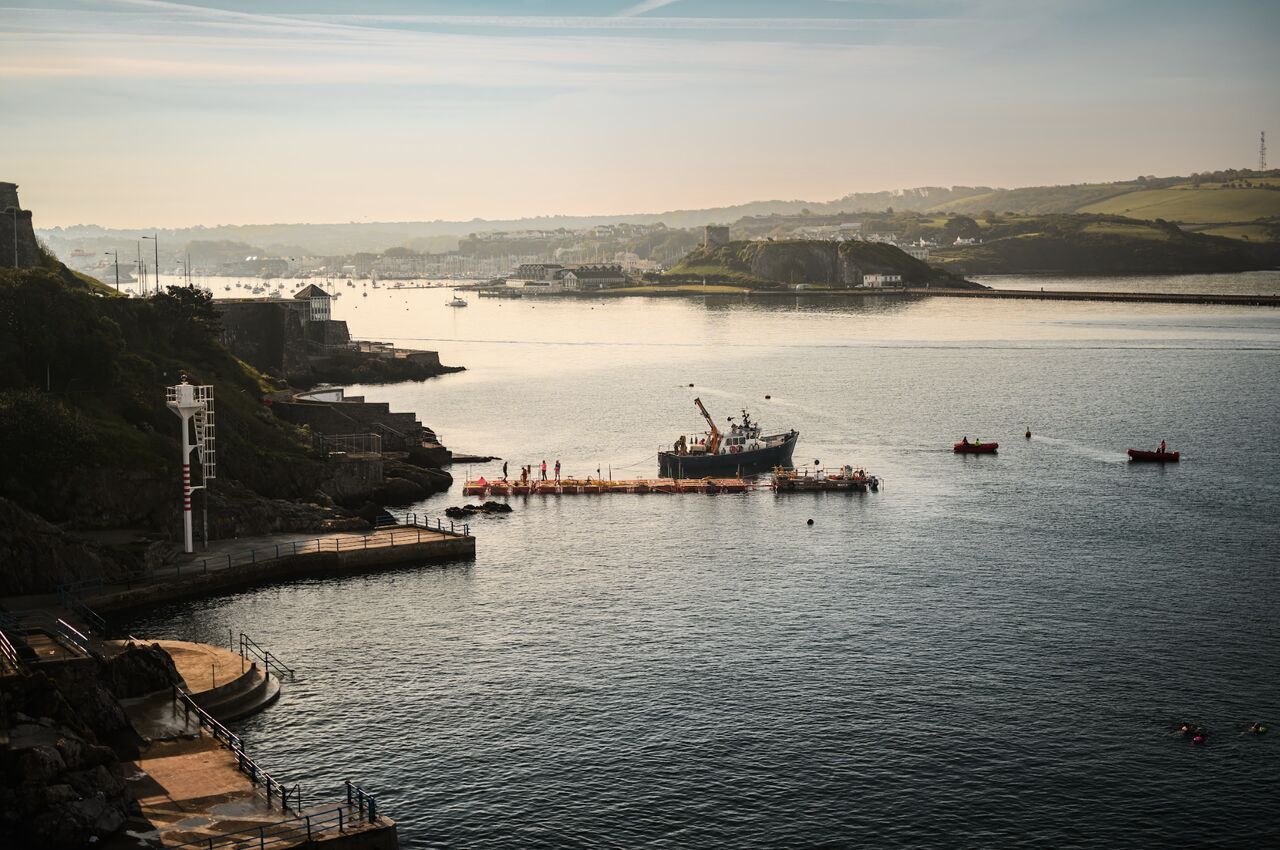
3. When the tide flooded, it floated the pontoons, mattresses and pipe. The following morning we very carefully towed it out of the marina between the yachts and across the harbour to the deployment site a mile away.
4. Once in place, pre-laid anchors were picked up to hold the pontoon in place. As the tide fell the matreses started to ground out with the pipe underneath to a tolerance of 100mm.
5. The rear two pontoons were in around 3m of water CD, so towards low water the floats in these were flooded via hoses and a manifold and sunk to the sea bed.
6. Divers disconnected the mattress and an air compressor then blew air into the floats to refloat them. The pontoon was towed away and de-mobbed.
This was a great first case study showing how ScaffFloat can be used below as well as above the water. The whole installation included a Cat 3 check from Richter Associates.