Levens Viaduct Restoration – Ulverston
Problem
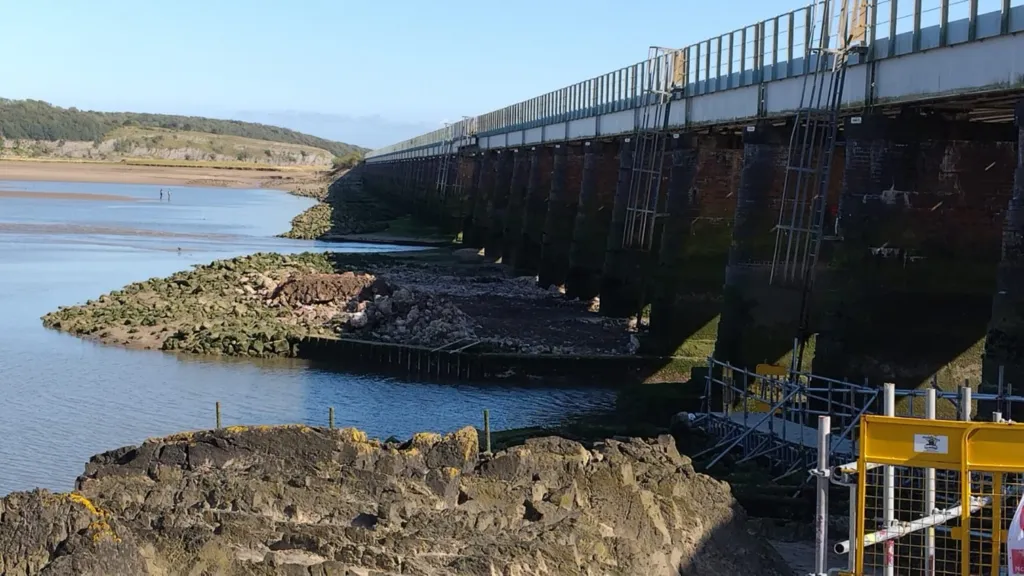
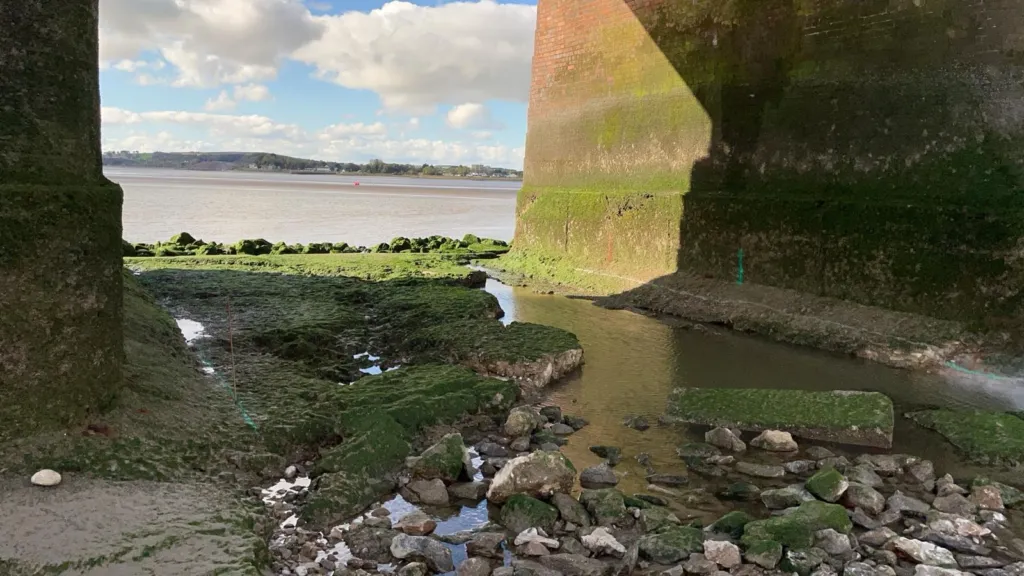
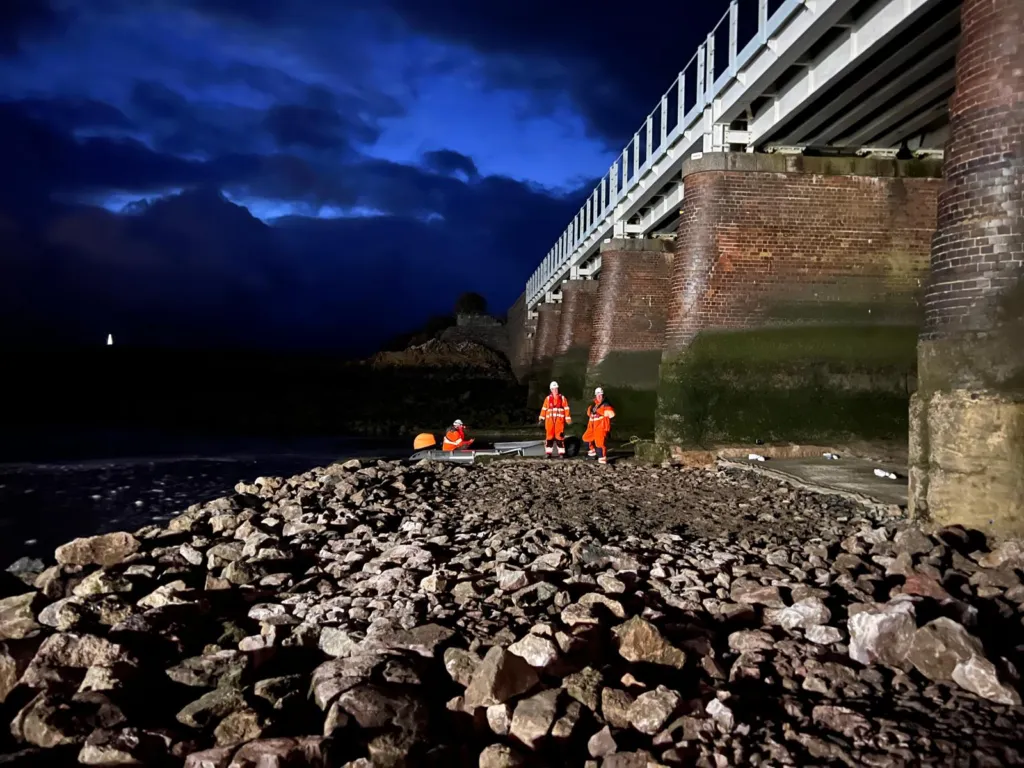
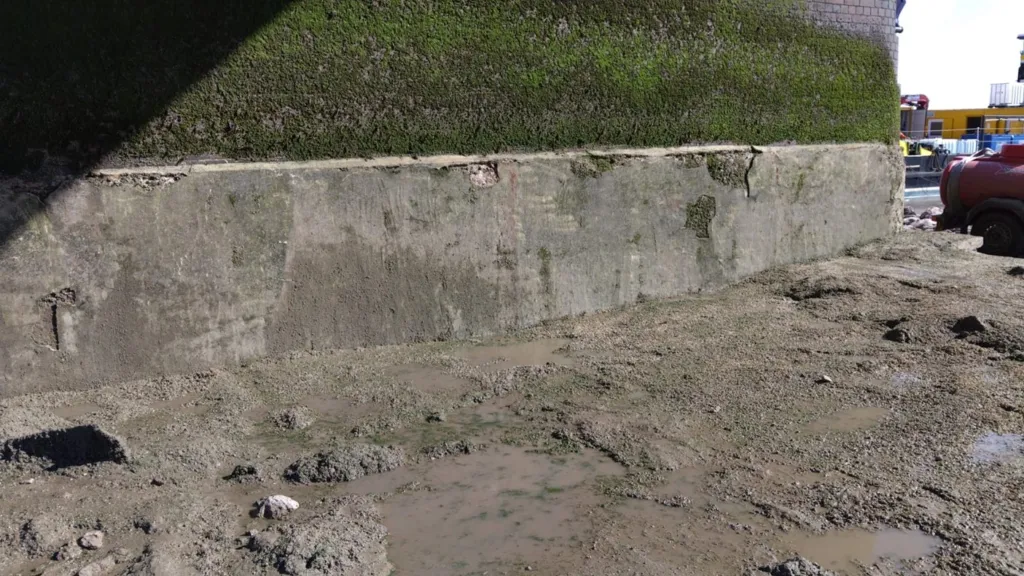
GPS MACS, working on behalf of Story Contracting and Network Rail, required marine support with the Grade II listed* Levens Viaduct in Ulverston. The viaduct, originally built in 1857, comprises 49 similar spans, with the piers constructed on a concrete apron.
The viaduct spans the River Leven, which carries freshwater runoff from Lake Windermere into the Northern end of Morecambe Bay. With a 10m tidal range and powerful tidal currents, combined with river levels reacting almost instantly to mountain rainfall, this proved to be an extremely challenging working environment.
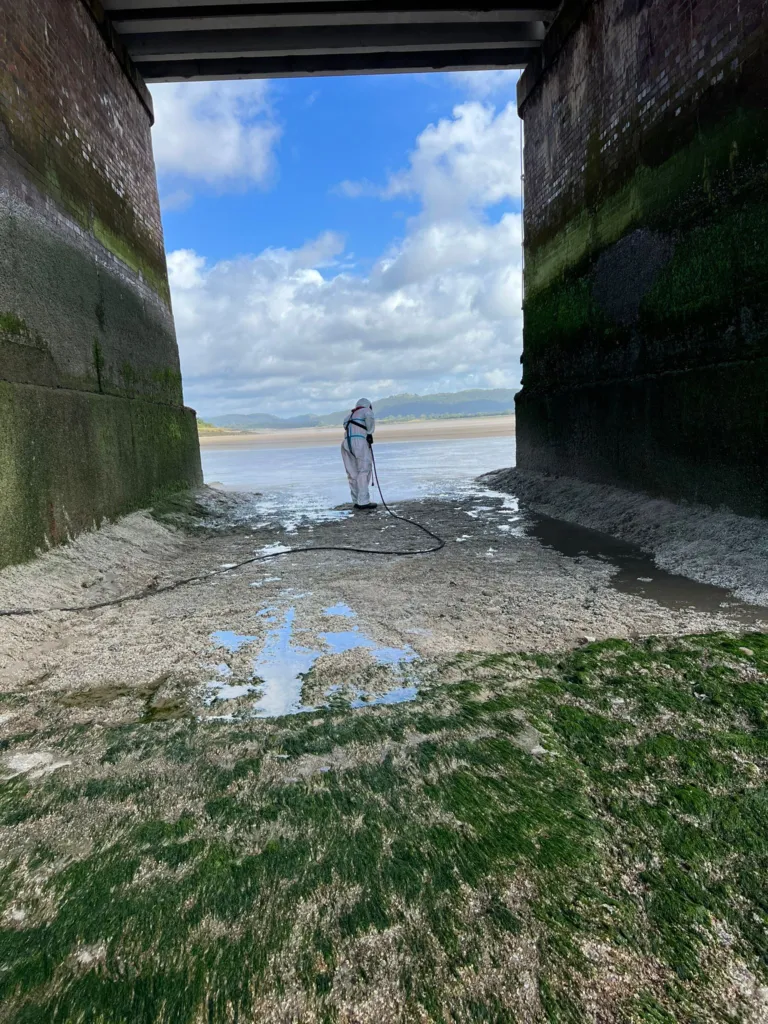
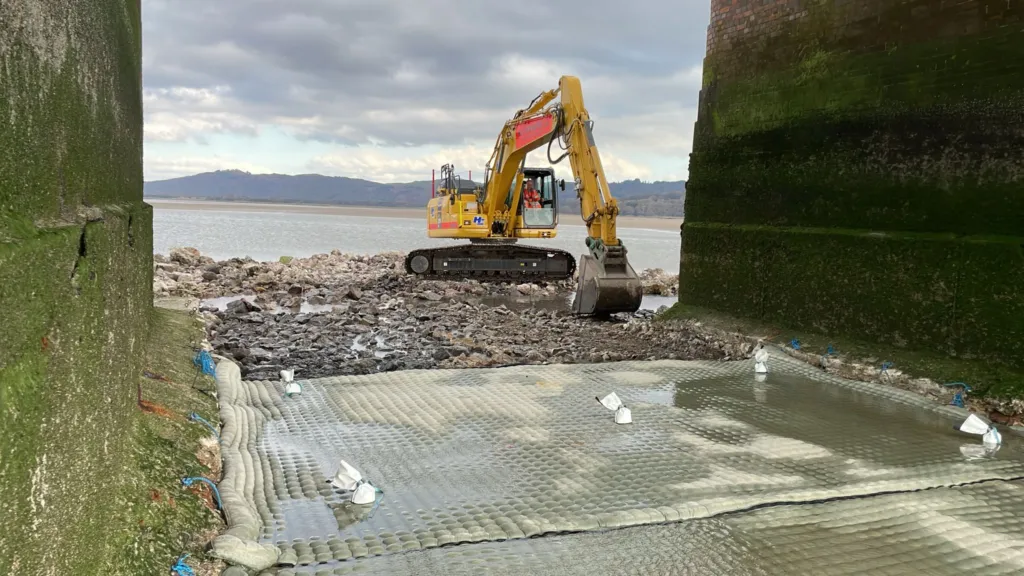
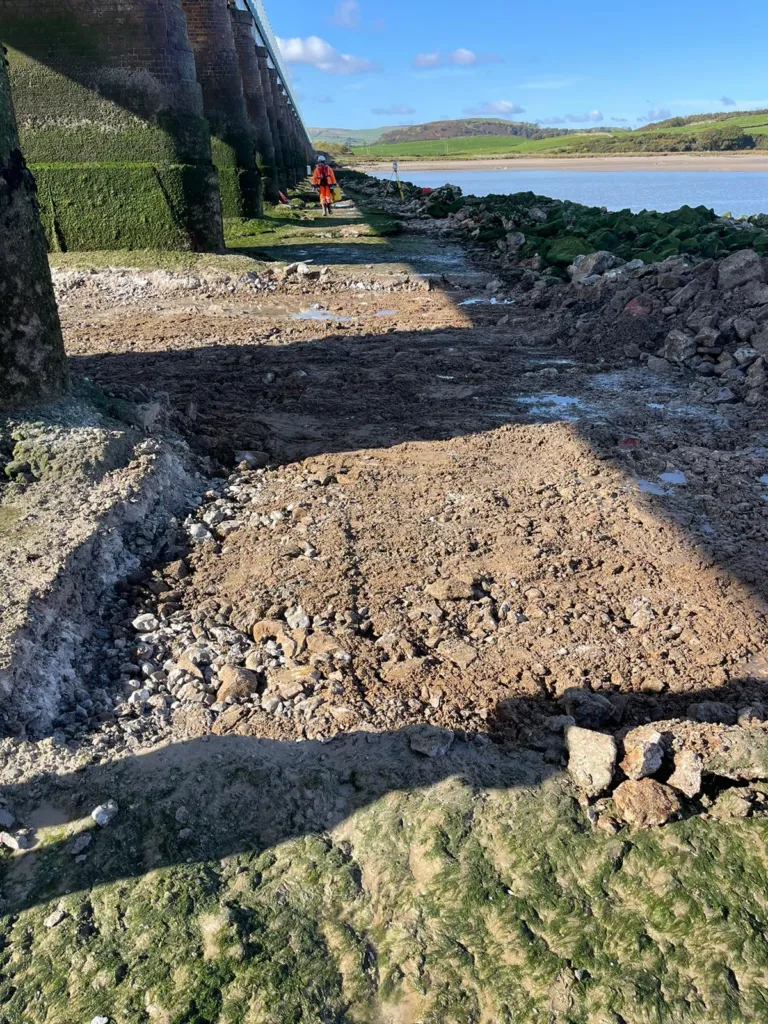
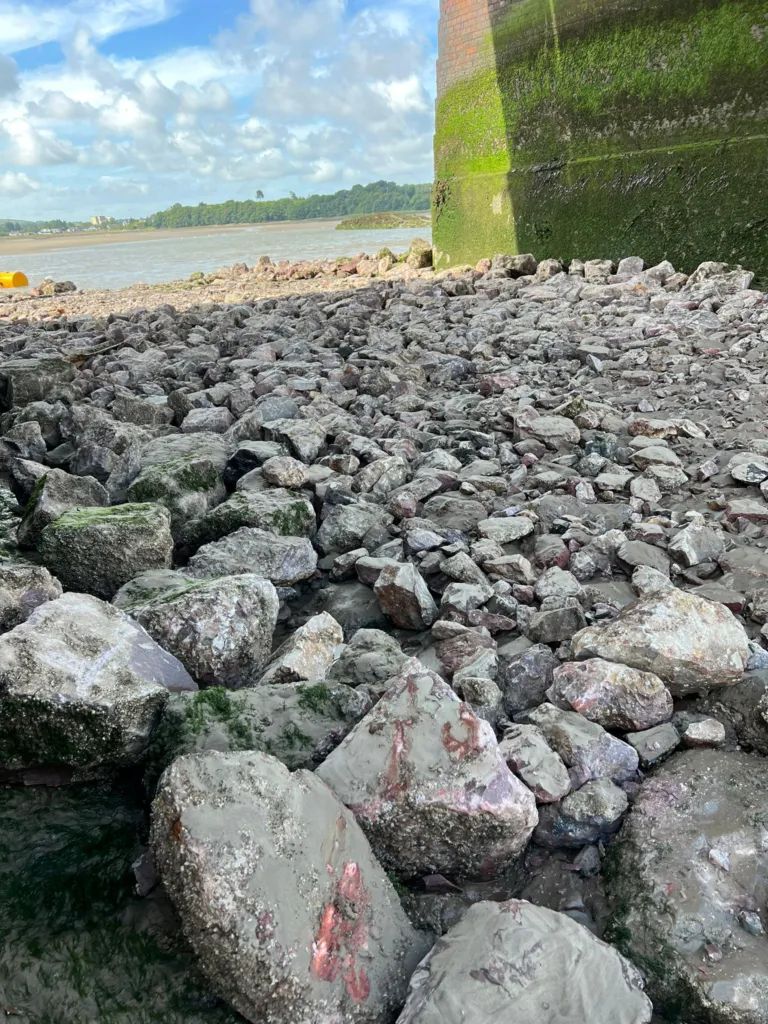
Due to the powerful flow, the concrete apron supporting the viaduct’s piers experiences high levels of damage from scour and erosion. The planned remedial work to repair this damage required large amounts of concrete and grout materials to be delivered by water to the viaduct, ensuring repair work could progress during suitable tidal windows.
The ScaffFloat system was chosen as it offered a number of benefits in this environment compared to traditional marine plant, including a very low draft, being able to mobilise on site, and being highly manoeuvrable in high flow rates next to the structure.
Solution
Our team mobilised a wide range of ScaffFloat assets to support this complex project, which also included the installation of mooring blocks and anchors to allow for the safe mooring of all the marine assets assigned to the project.
The flexibility of the system and the ease with which it can be mobilized and demobilised meant that we could efficiently repurpose pontoons as the scope of the project progressed. We mobilised the following assets:
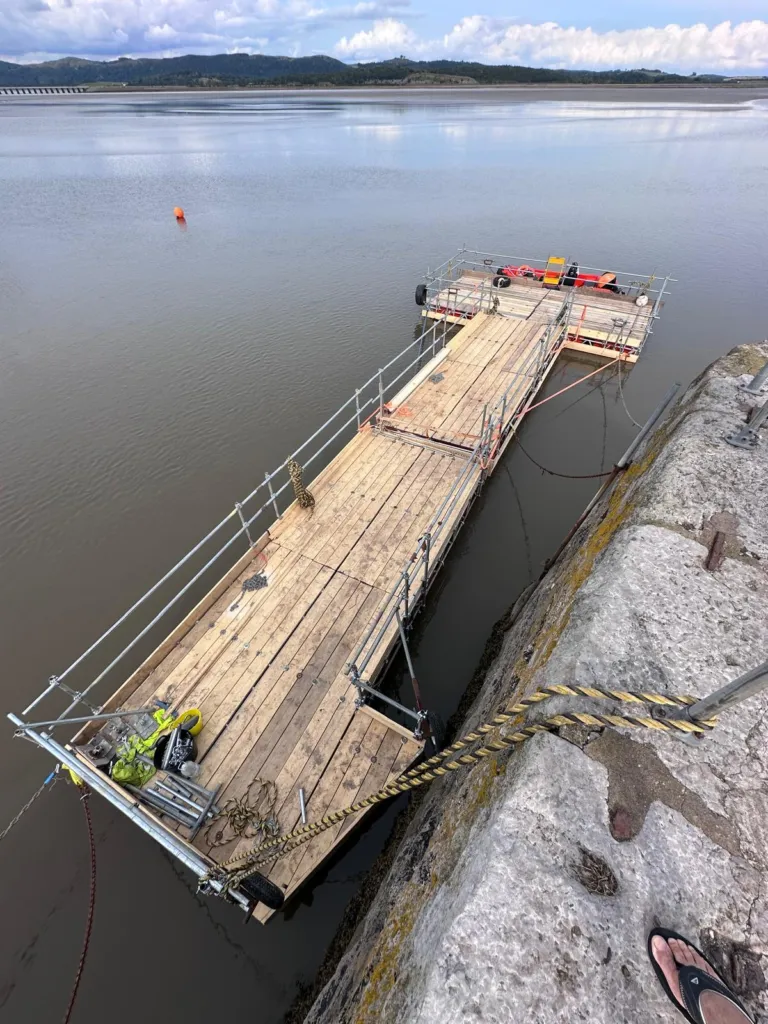
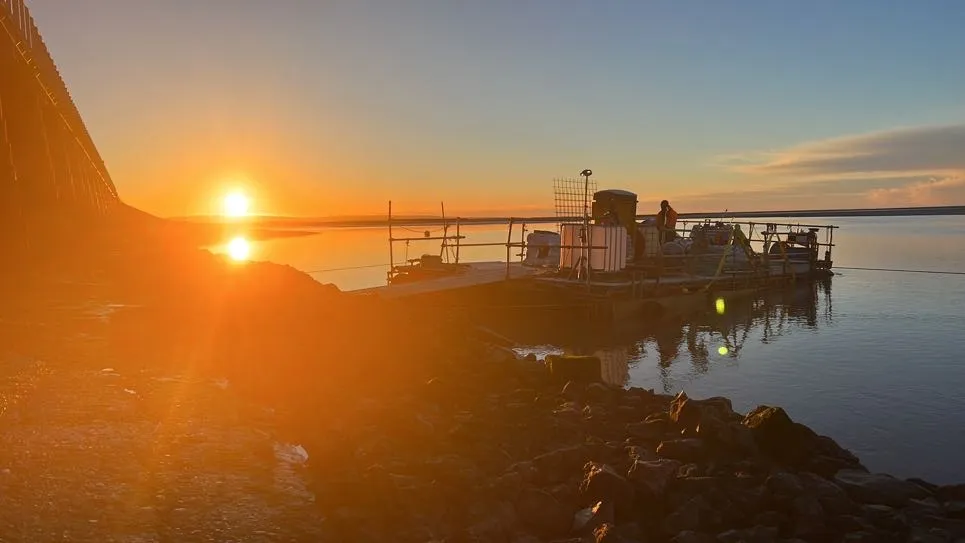
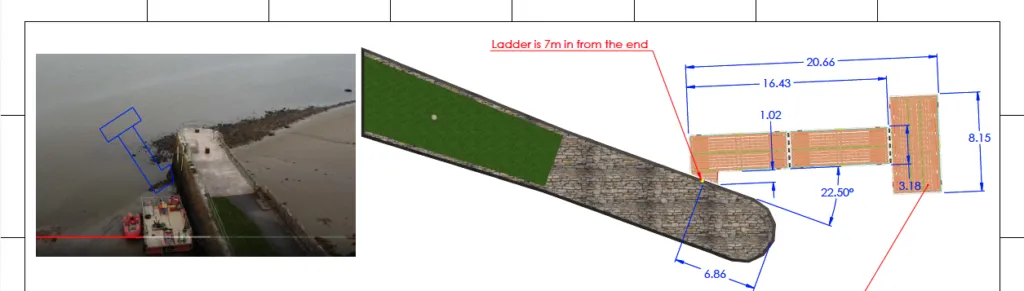
Static Access Pontoon: Fixed to a bullnose masonry pier for crew transfer at all states of tide.
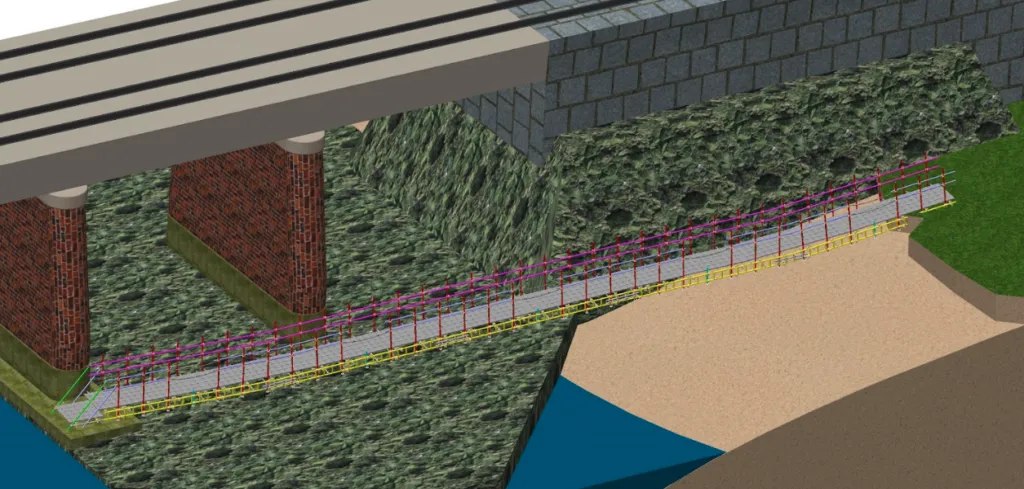
Fixed Walkway: To allow safe access to the viaduct from adjacent fields.
12m x 6.4m Workboat: With twin 100hp propulsion (used for personnel transfer).
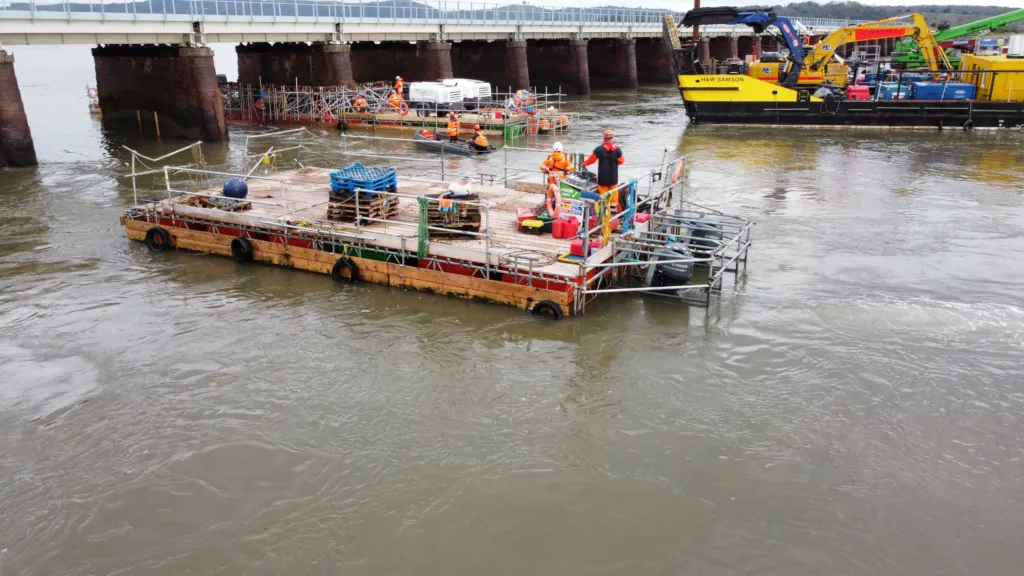
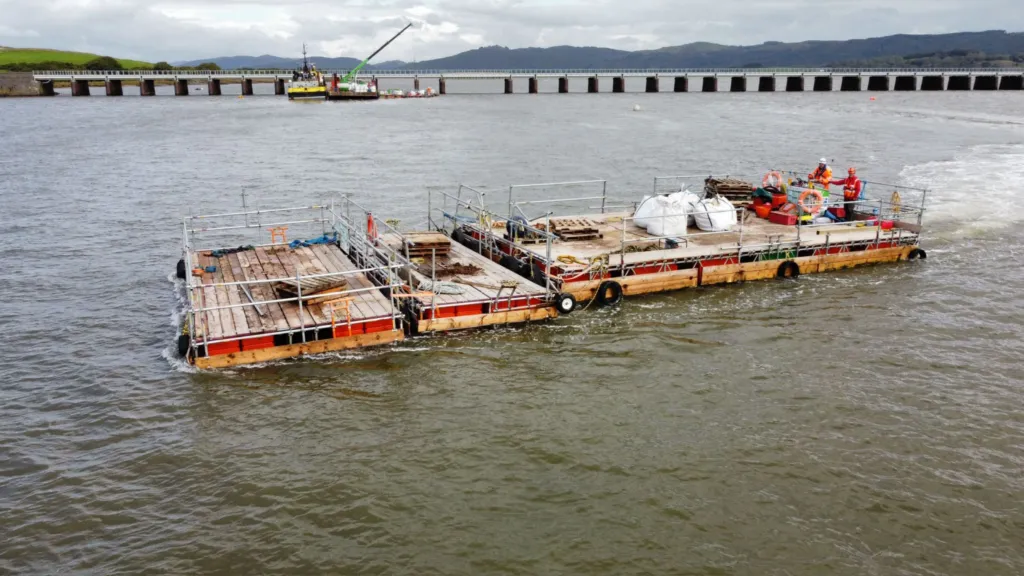
16m x 6.4m Pontoon: Unpowered, used for bulk materials transfer.
8m x 6.4m Self-Propelled Workboat: With two 60hp outboards, used to push unpowered pontoons and deploy anchors for vessel mooring at the viaduct.
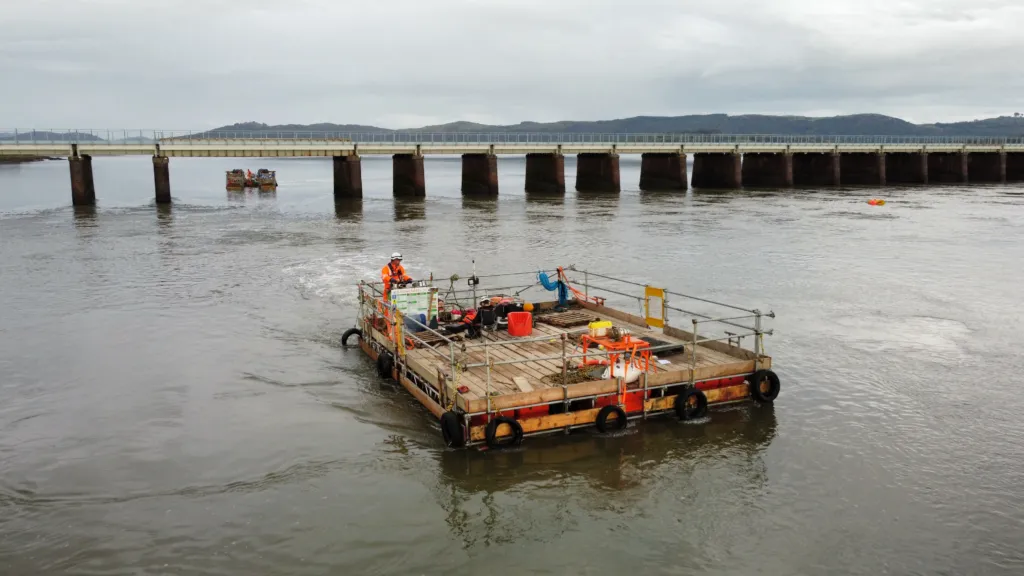
12m x 6.4m Self-Propelled Pontoon: Used for materials transfer and pontoon pushing.
8m x 4m Units: A combination of unpowered and self-propelled workboats for materials transfer.
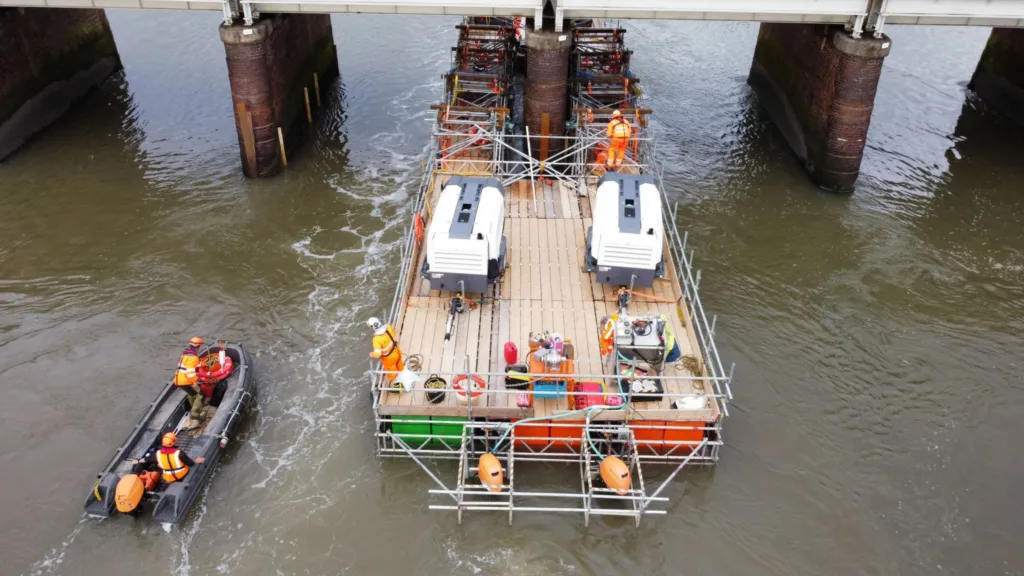
Two Bespoke Self-Propelled Pontoons: Specifically designed for the transfer and placement of concrete collars (for scour protection of viaduct piers).
Coded Whaly Boats: Two were assigned to the project to support crew transfers to and from the concrete apron.
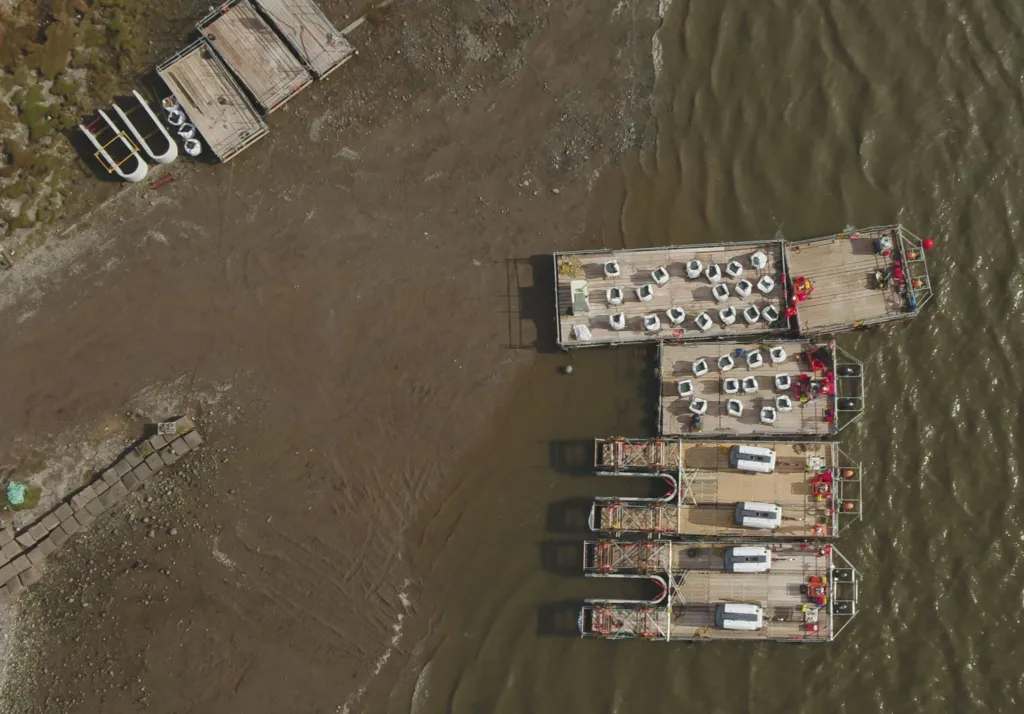
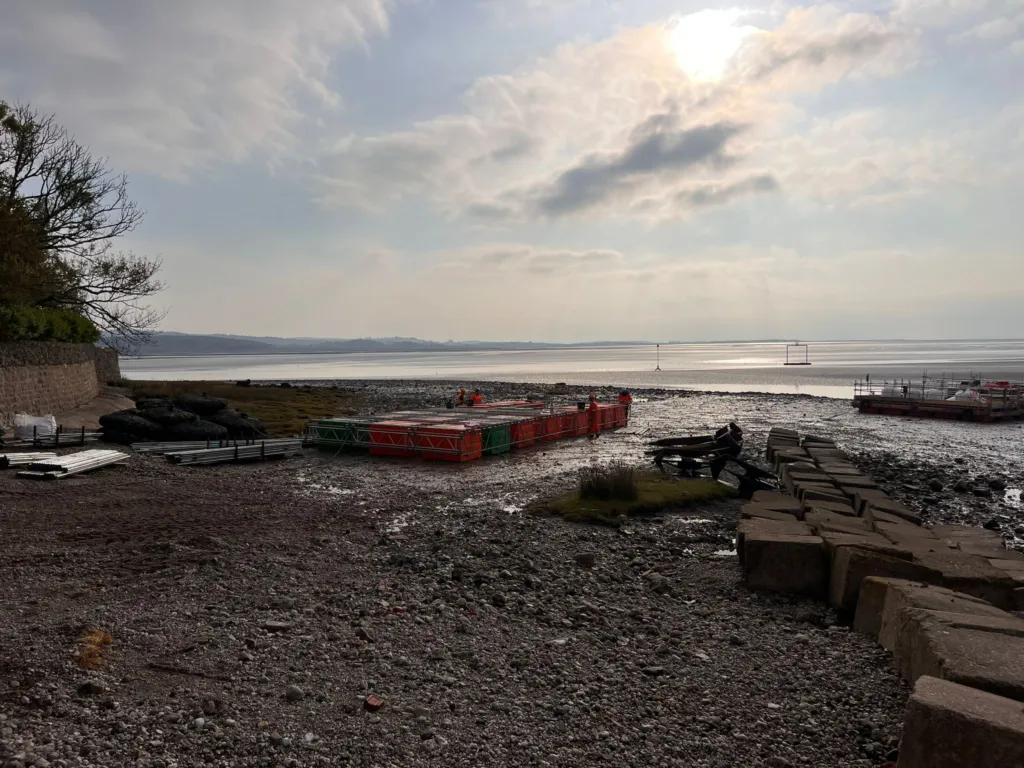
Mobilisation was carried out by the ScaffFloat team in an intertidal location on the foreshore, approximately 1.5km downstream of the viaduct. The pontoons were easily launched as the tide rose and, when needed, could be pushed into the water using on-site plant. Wooden skids were added to the underside of the pontoons to offer sacrificial protection while they were dried out on the rocky foreshore. A dedicated ScaffFloat team of skippers and crew remained on site for the entire duration of the project to manage pontoon operations.
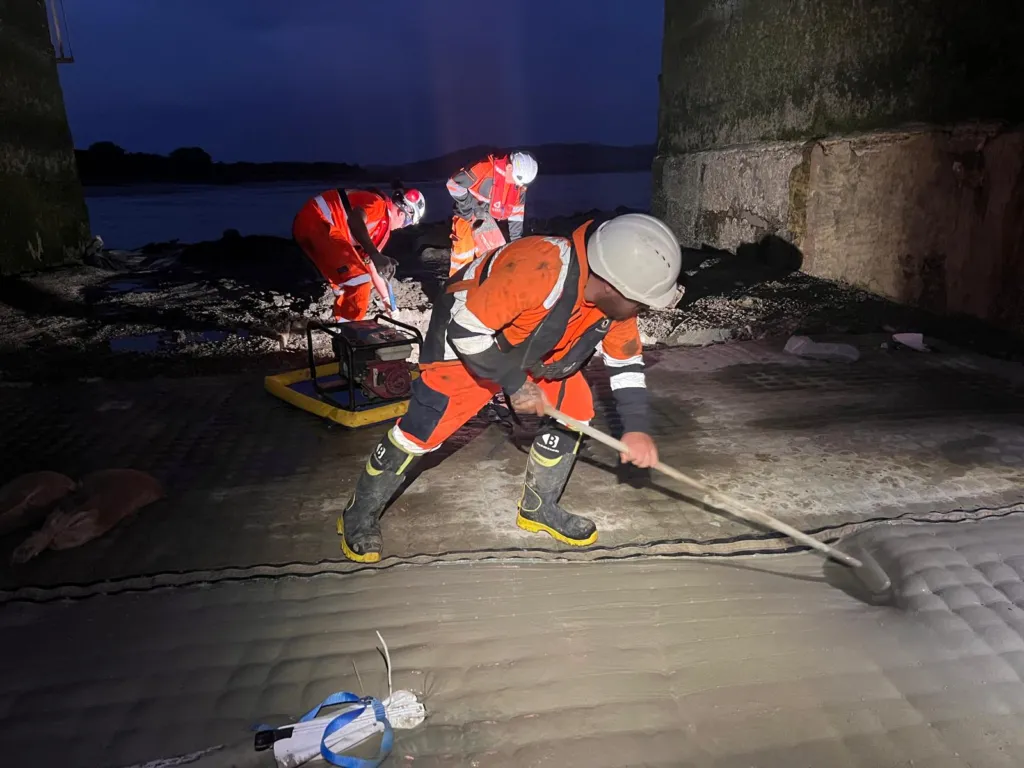
Initial works included setting up the site with moorings buoys, the workboats also supported laying of a substantial anchor system to the south of the Viaduct for a large landing craft which held materials and machinery immediately adjacent to the viaduct which deployed to, and recovered from the apron at suitable stages of the tide. A large steel barge was also anchored at the viaduct for several months – this carried a grout spread, which mixed and pumped large volumes of cement grout into mattresses pinned to the apron to reinstate damaged sections – this required up to 16 tonnes of materials every day to ensure production was maintained in line with the project programme.
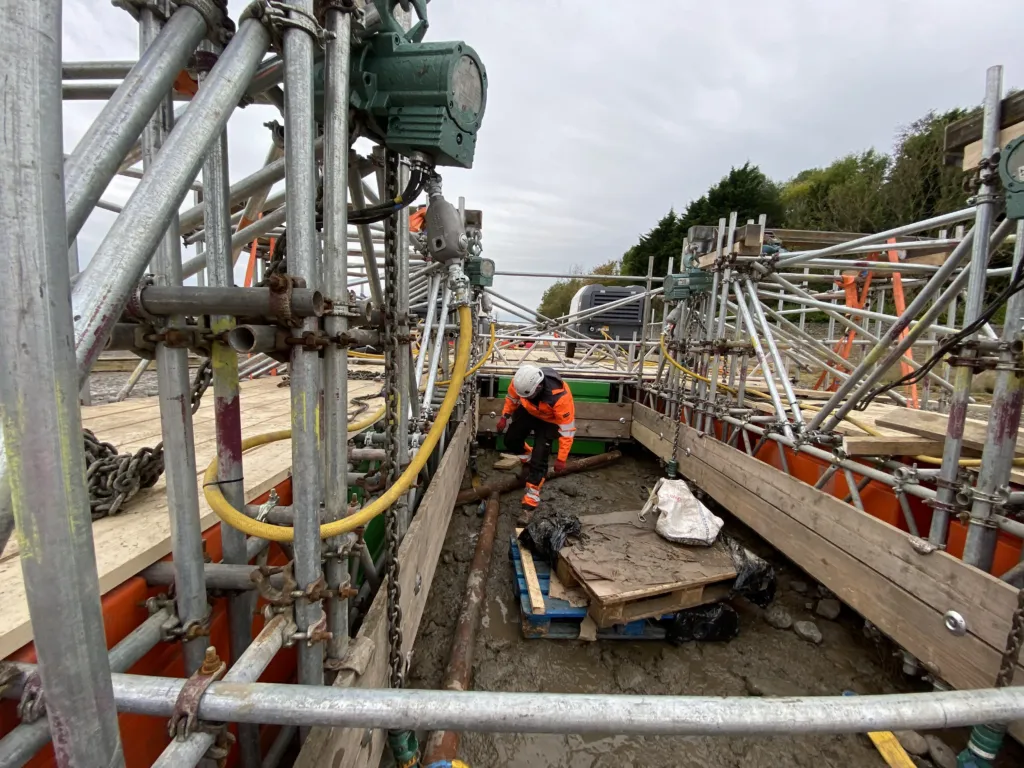
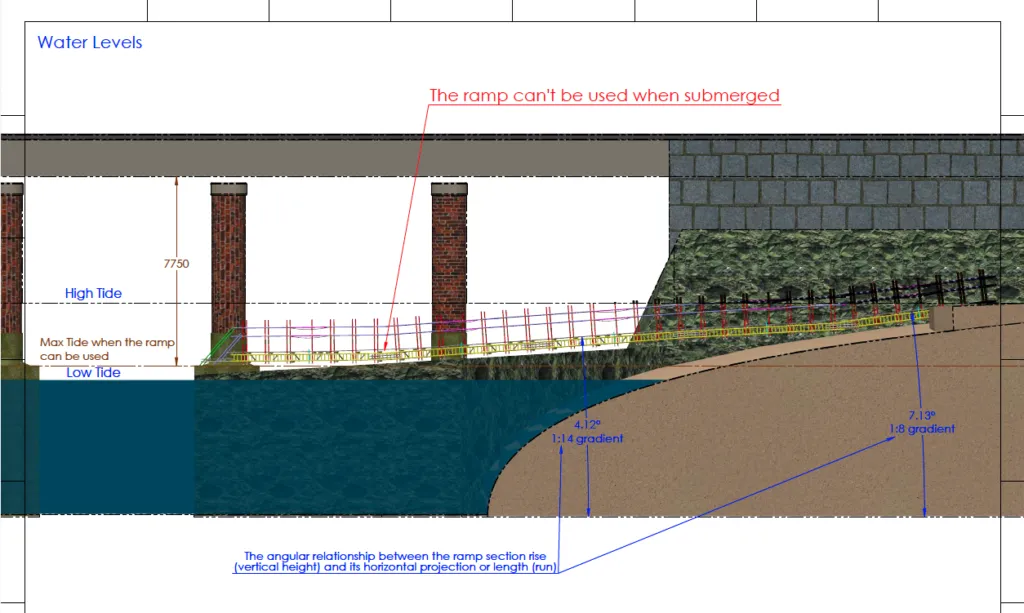
Access for personnel to the viaduct was achieved by pontoons from the beach or via boat from a static pontoon fixed to a masonry pier located 1km downstream of the viaduct. Access on foot at low tide was also made possible via a scaffold walkway/causeway we built at the west end of the viaduct. This ran to a deep channel between two piers where the ScaffFloat crew was able to transfer personnel across to the apron using a small Whaly boat. Weekly scaffolding checks were carried out to ensure the causeway (which was fully submerged every high tide) remained safe and compliant.
Hundreds of tonnes of materials were transferred between shore and the viaduct during the programmed works by ScaffFloat. Following each transfer, the pontoons were dried out on the foreshore – this was adjacent to the site compound where the materials were stored. At low water, the pontoons were reloaded with more materials and floated off as the tide rose. ScaffFloat personnel also supported work carried out on the apron during low tide and were always on hand to transfer personnel between shore/viaduct as and when required.
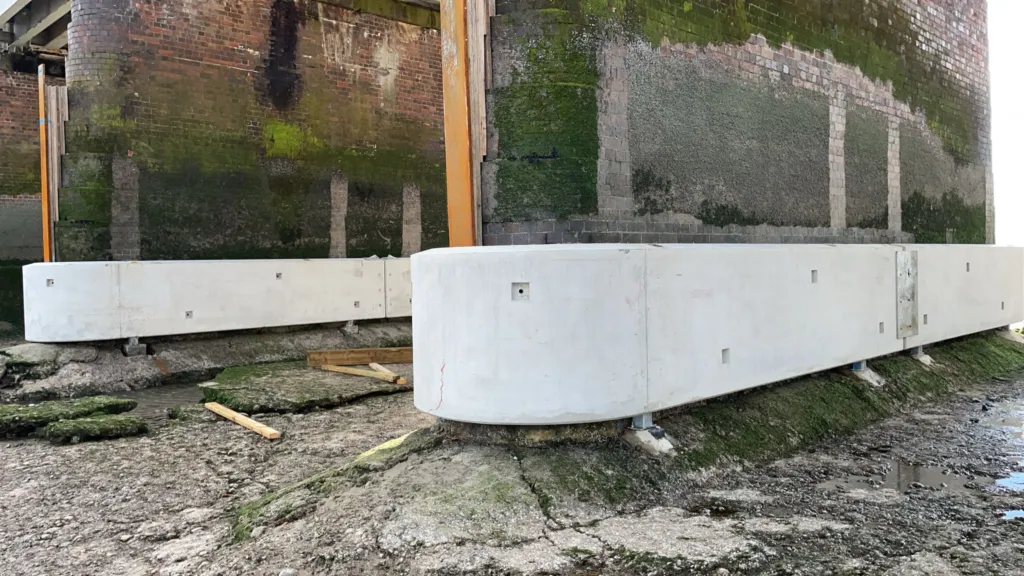
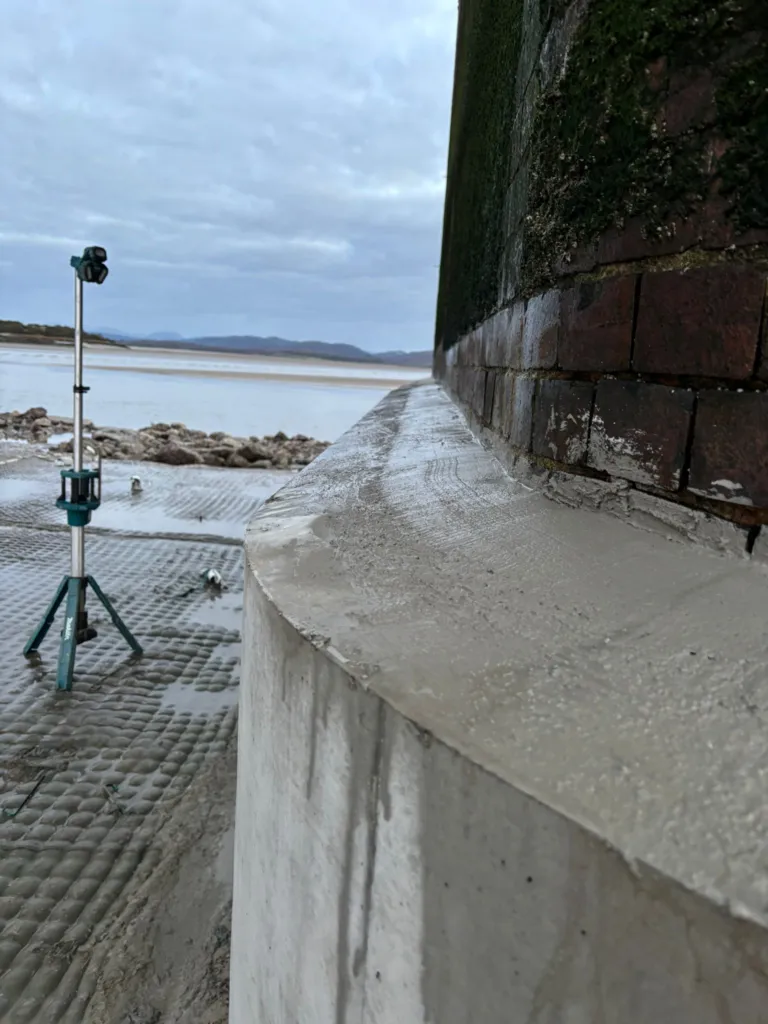
A number of piers required additional protection from scour – this was achieved by installing two interlocking horseshoe-shaped reinforced concrete collars around the pier and lowering them to the apron.
ScaffFloat was consulted early on in the planning process and suggested using two self-propelled pontoons with a recess in the bow. Using 4 cantilevered lifting beams per recess together with four 3t chain hoists, the two collar halves could be docked around the piers at high tide, connected with bolt plates, and then lowered to bed with the chain hoists. Finishing grout works could then take place at low tide.
Installation Methodology
The collars were loaded into the pontoon hoist system at low tide, and the pontoons were then navigated to the viaduct at high slack water. The operation required a high degree of coordination:
- One pontoon went under the viaduct and docked around the pier from upstream, while the 2nd pontoon docked around the pier from the opposite side.
- The concrete collars were then fixed together and simultaneously lowered into position. Once lowered, the collars were released and the pontoons returned to shore.
- Given the slack water period was only a few minutes, the operation had to be rehearsed to ensure it could be safely performed.
This was a highly challenging project that required close cooperation between all parties involved to overcome issues related to the high tidal flow.
Gallery
 Levens v3